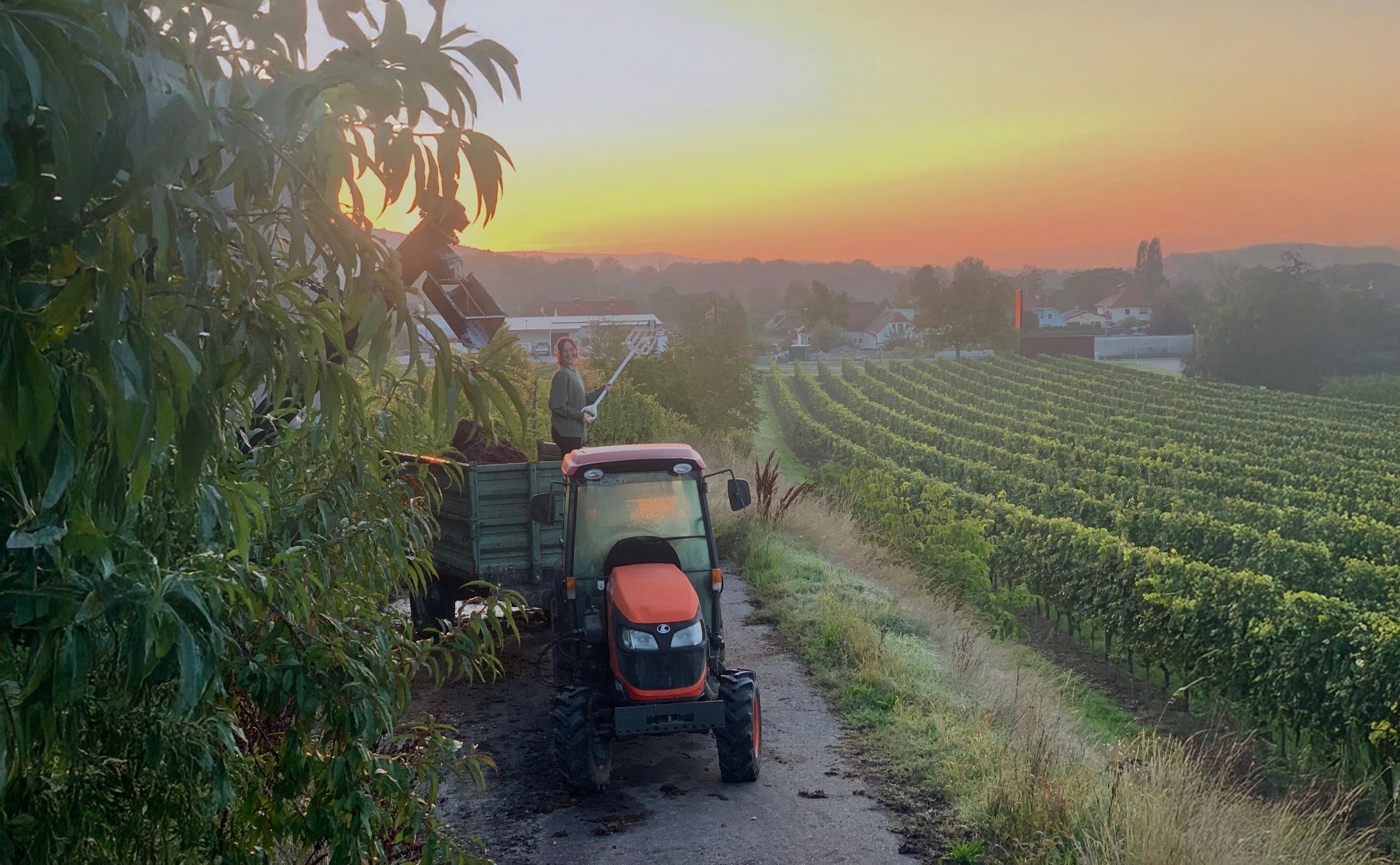
In 1997, Fred Loimer took over his family wine estate in Langenlois, Kamptal, after spending most of his life in its winery and vineyards. While continuing his family’s winemaking legacy, he insisted upon breaking the mould of Austrian winemaking at the time, fermenting both Grüner Veltliner and Riesling in used oak barriques, experimenting with Biodynamics and replacing traditional labels with minimalistic, playful designs.
I had the privilege of working with Fred during the 2025 vintage, as part of my Liberty Wines Apprentice harvest experience. His passion for respecting the land and situating his work in harmony with the natural world was evident throughout; “they [his wines] are all natural, some are simply made using more traditional methods”, Fred explained.
2025 Harvest
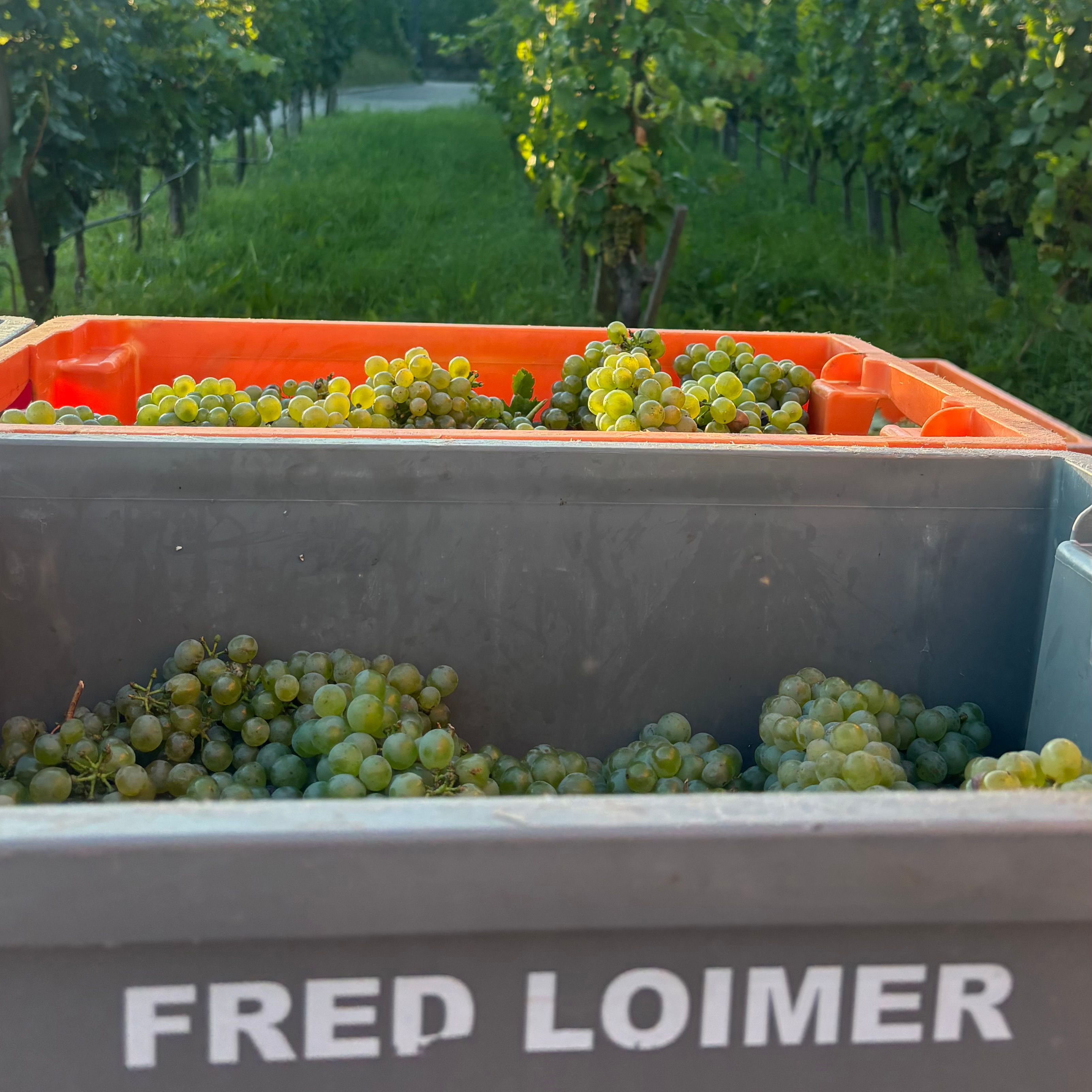
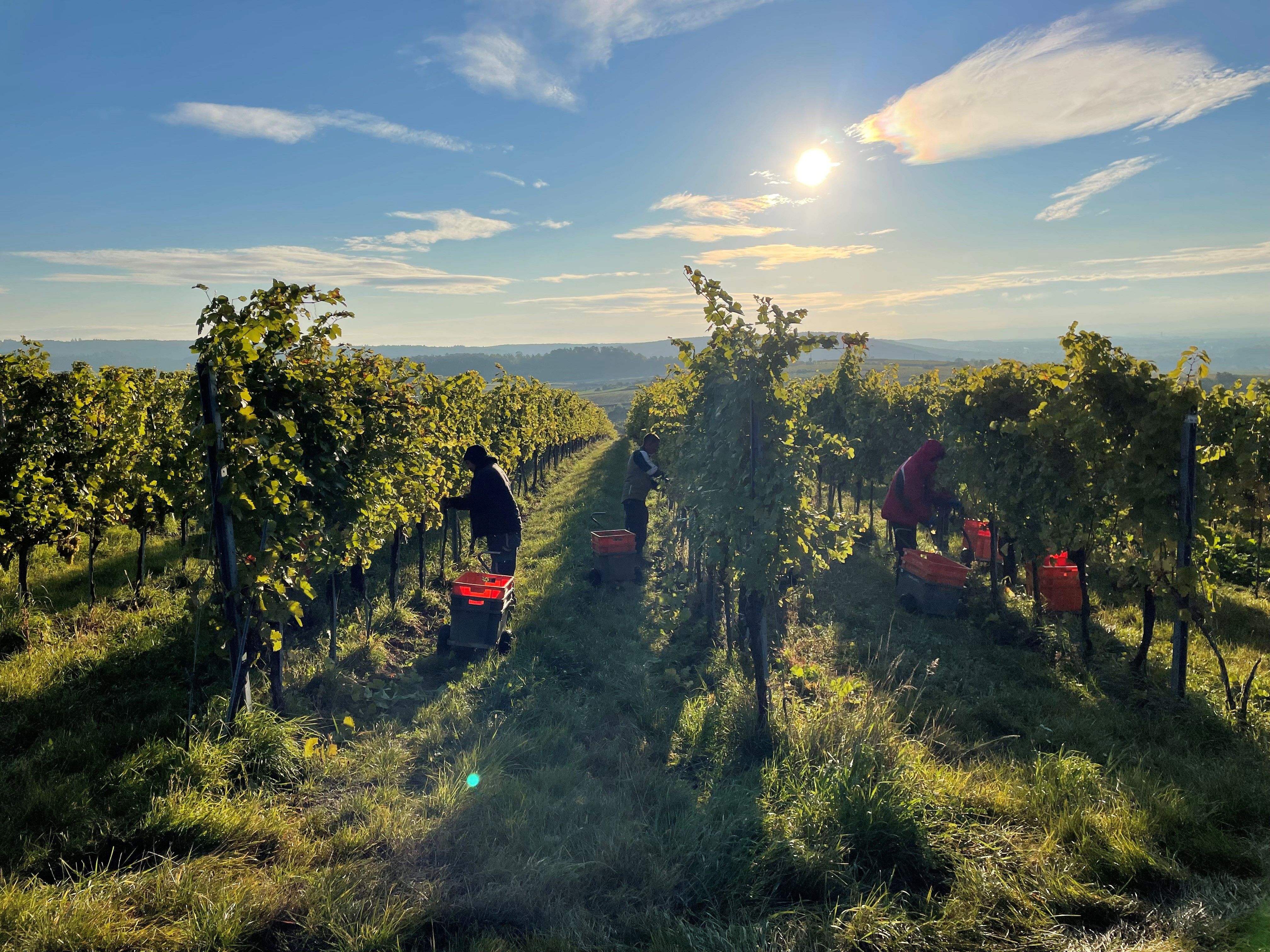
Loimer cultivates prized plots of Grüner Veltliner and Riesling across many varied soil types, ensuring the depth and complexity of each wine reflects its site and variety. My walk down to the winery each morning was beautiful, watching the sun rising behind the hill of Heiligenstein, slopes of red sandstone and granitic, volcanic soil, famed for high-quality Riesling. Fred also cultivates Pinot Noir in the town of Gumpoldskirchen (in the warmer historic Thermenregion south of Vienna), for both still wines and traditional method Sekt. It is with his Sekt that Fred experiments most with blending, utilising Zweigelt, Saint Laurent, Pinot Blanc and Chardonnay in addition to Pinot Noir.
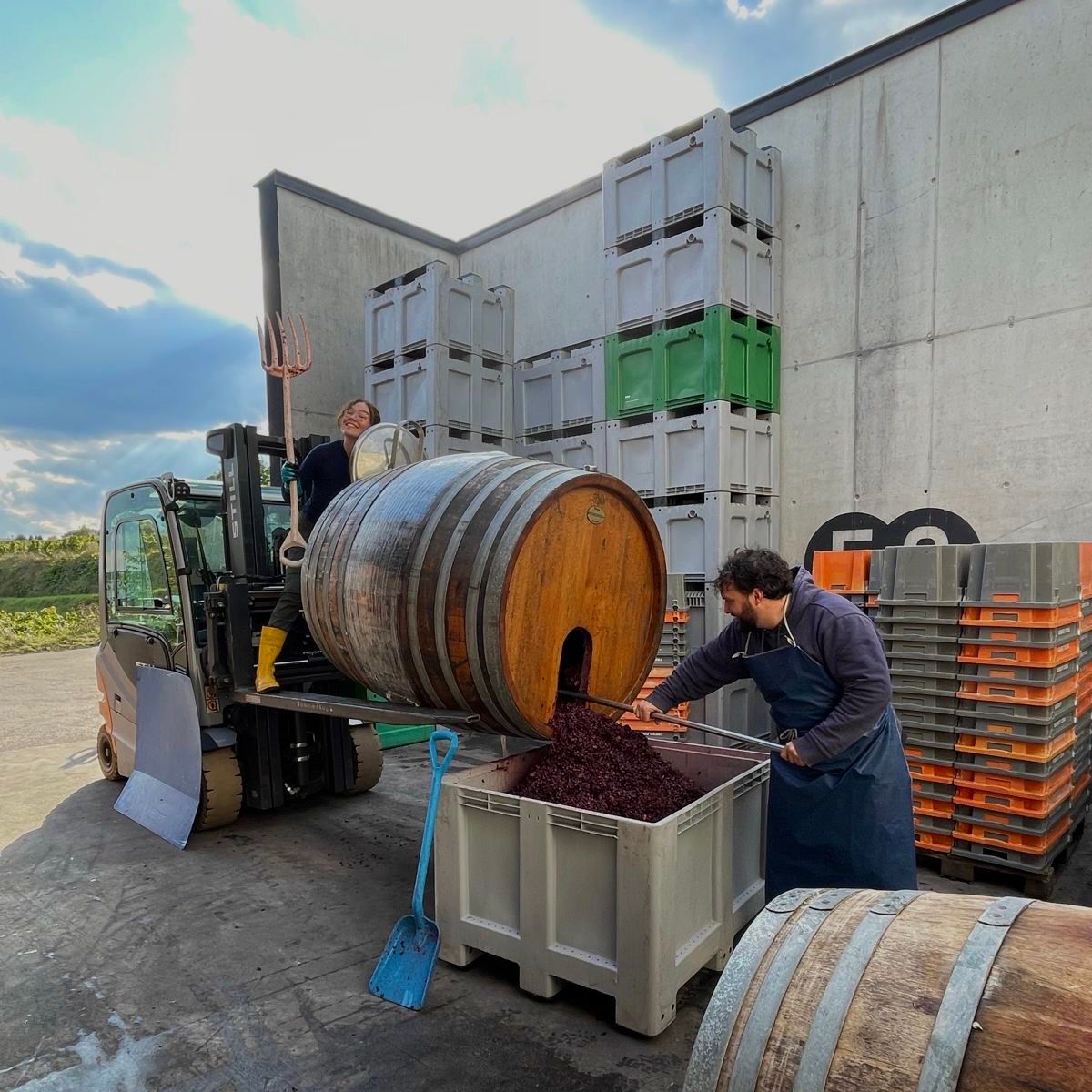
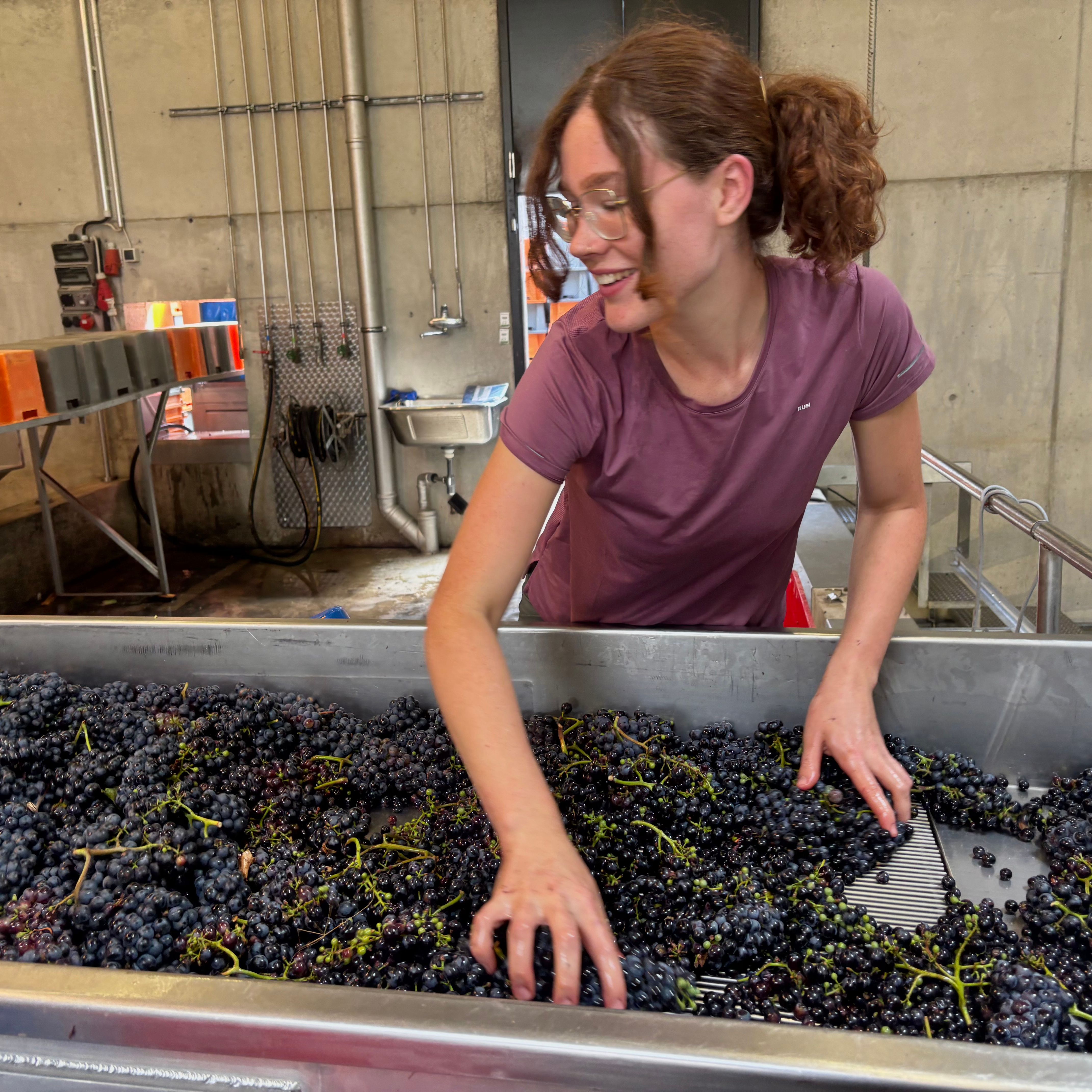
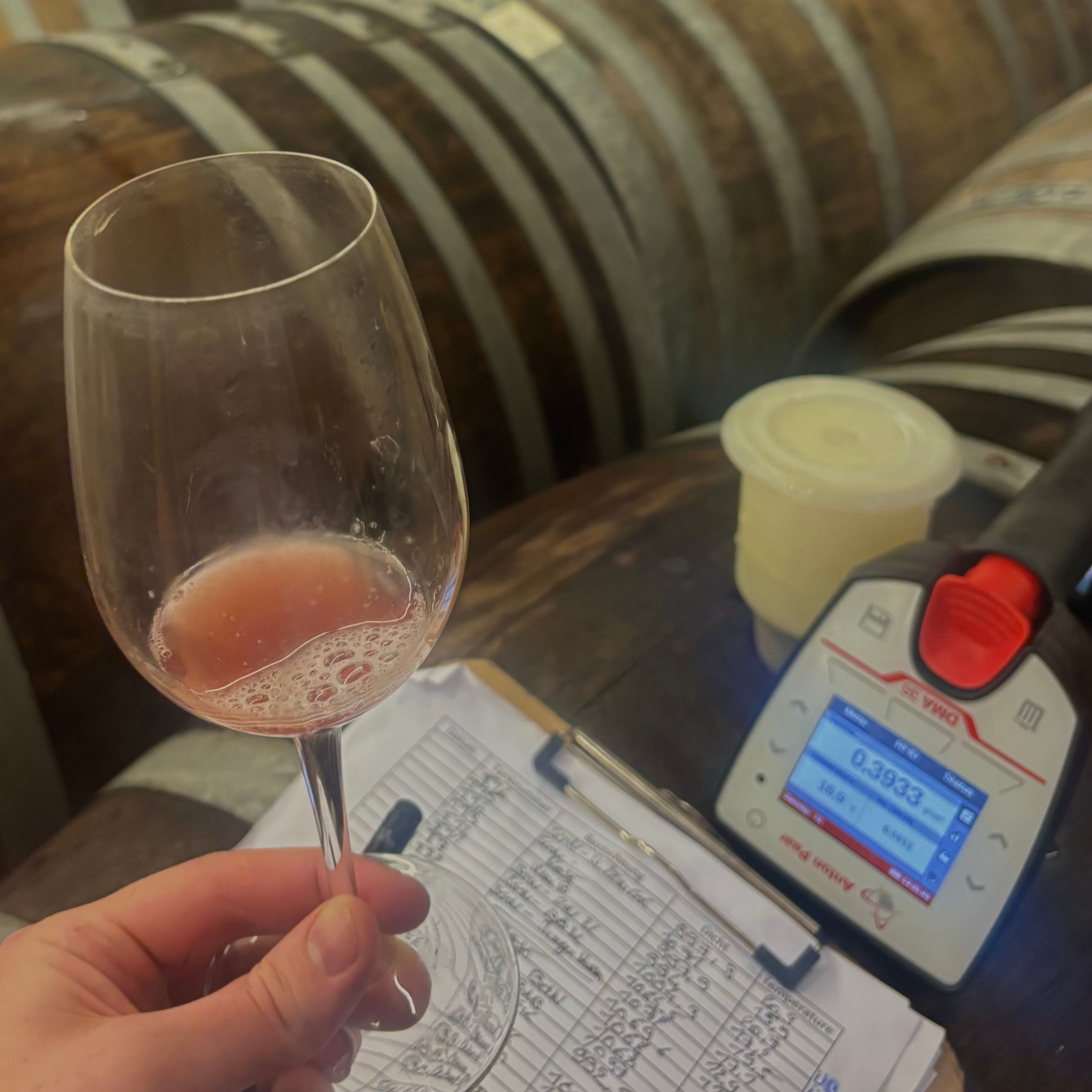
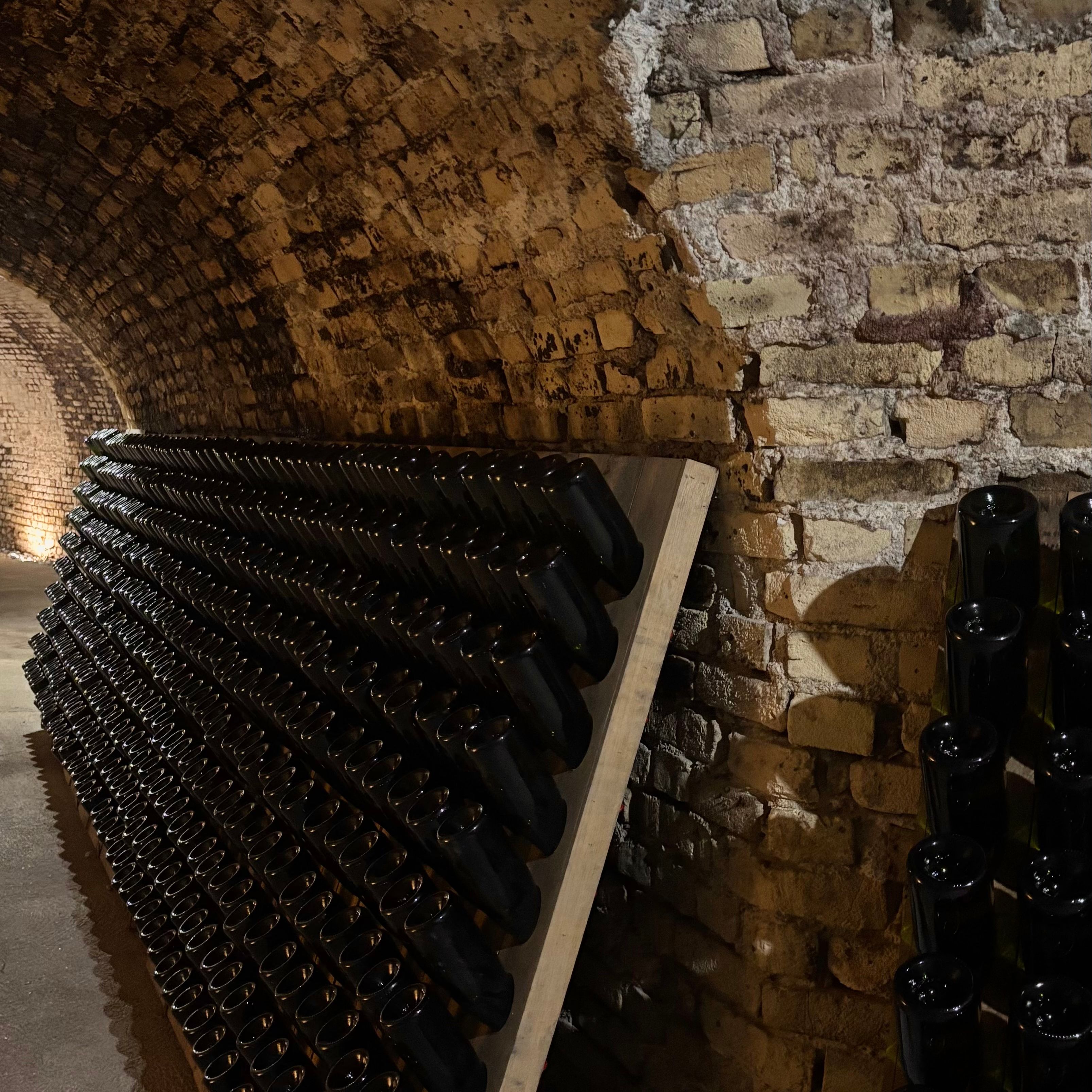
Working with such a variety of grapes and sites gave me an invaluable education in Austrian wine that complemented my WSET Diploma studies. I could see my textbooks come to life, and in that, the reality of viticulture and winemaking. Fred and his team involved me in every aspect of Harvest. Day to day was, of course, filled with a lot of cleaning, but I also experienced racking the must to fermentation tanks/barrels, Pinot Noir punch downs/pump overs for casks with varied ratios of whole bunches/berries, as well as Sekt and Pinot Noir blending. I also experienced fermentation analysis (tracking the temperature and density levels to see how quickly the must fermented to dryness, while determining if any bâtonnage was needed) and even hand riddling some of the Rosé Sekt in the 150-year-old tunnels underneath the estate – not a gyropalette in sight!
Fred is an impressive person and he and his team are very generous with their knowledge. Yet I think one of the core learning experiences of harvest was how much we tasted from across Austria. Many days ended with blind tasting Austrian wines, learning about regional variation and understanding why they all differed. Before Vintage 2025, I had a grasp of Austria’s wine-producing regions through my Diploma studies and my part-time work as a Sommelier at AngloThai, whose dynamic wine list champions Austrian and Central European wines. Yet through these tastings, I built a bigger picture of how each Austrian wine region relates to another, how their history has shaped their wines and where they fit in the current market.

Wine Regions 101
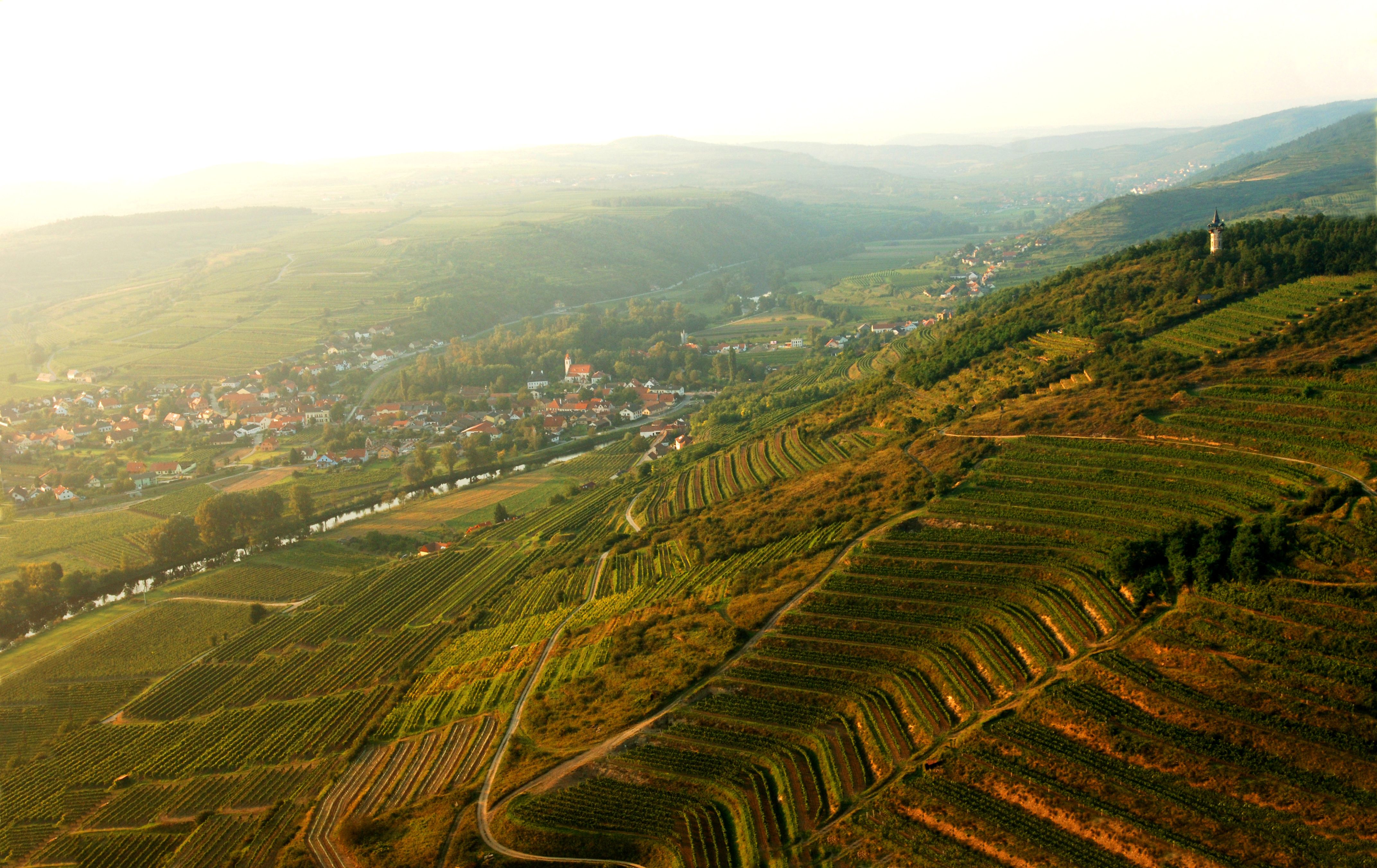
Most Austrian wine regions are located in the eastern part of the country due to more favourable climatic conditions. Lower Austria (Niederösterreich) is Austria’s largest Qualitätswein wine-growing region with eight smaller Qualitätswein regions within the area, based on the distinct styles deriving from rich variations in elevation and soil types.
The steep crystalline hillsides of Wachau, which line the Danube River, transition into Wagram’s loess terraces, which then become interspersed with ancient volcanic rock (gneiss, granite and amphibolites) in Kamptal. In my experience, this translated into steely expressions of Riesling and Grüner Veltliner from the Wachau, particularly in F.X. Pichler’s wines, most notably the sleek and salty Ried Steinertal Grüner Veltliner. Conversely, in Kamptal, Loimer’s wines show the ripe, spicy zest of the same varieties, shining in the `Käferberg` Erste Lage Grüner Veltliner. Both producers champion the pre-eminence of single-vineyard wines, and therefore tasting their wines side by side highlights the unique distinctions between the regions, with Wachau’s saline precision and Kamptal’s elegant generosity.
Burgenland is Austria’s easternmost wine region. With its sandy, limestone soils and warmth from the Pannonian plain, it offers the perfect conditions for red grapes Blaufränkisch, Zweigelt and Saint Laurent. By focusing on quality and moving away from heavily extracted styles, winemakers across Burgenland are now producing blends and varietal red wines that are bright and elegant, with spicy aromatics typical of its sandy soils. Heidi Schröck & Söhne are a perfect example of this. They are also pioneering the revival of traditional varieties, such as Furmint, a grape most known by its Hungarian plantings, because (to quote Jancis Robinson MW’s Oxford Companion to Wine) “Furmint all but died out after the First World War” in Austria, as Rust was ceded to Austria in 1921. Tokaj winemaker Robert Wenzel reintroduced Furmint to Burgenland in 1981, and since then, Heidi Schröck has played an integral role in its revival and related legislation (she founded the Cercle Ruster Ausbruch in 1991 with other growers) to reconnect with Burgenland’s winemaking heritage.
With Steiermark, in south-east Austria, comes fresh, aromatic complexity from steep limestone-rich slopes. Hand-harvesting is mandatory throughout this mountainous region. Sauvignon Blanc reigns supreme, but with a noticeable point of difference to its French and New Zealand iterations, forgoing herbaceous notes for saline minerality. The region’s winemakers increasingly insist on extending ageing regulations to allow the wines adequate time to develop the typical character of their origin; unique ripe fullness, alongside spicy flintiness as tertiary elements evolve. This is perfectly exhibited in Sattlerhof’s savoury `Ried Kapellenweingarten` Sauvignon Blanc.
Vienna forms a natural, green belt around the city and provides accessible wine tourism for curious visitors who may not wish to explore beyond the city limits. These vineyards preserve the historical ‘Wiener Gemischter Satz’ style. It comprises a field blend of varieties which are grown, picked and vinified together, expressing the individual characteristics of each vineyard rather than specific varieties.
Abundance of Connections
Despite incredibly varied regions and wine styles, the more I tasted, the more I realised that what connects Austria’s top producers (like Loimer, F.X. Pichler and Heidi Schröck & Söhne) is their dedication to expressing site.
Historically, an early example of origin-based wine labelling in Austrian wine came from Habsburg Empress Maria Theresa, who granted winemakers from Rust, Burgenland, the privilege of branding their casks with the letter “R”. Today, this has evolved into the DAC (Districtus Austriae Controllatus), ensuring wines display the unmistakable characteristics of specific regions. Respect for origin goes hand in hand with Austria’s world-leading environmentally conscious viticulture. As of 2025, 25% of all Austrian vineyards have been certified organic, placing it ahead of Spain (17.8%), France (17.4%) and Italy (14.6%).
Austrian winemakers are producing mineral, low ABV white wines with natural food-pairing prowess. Their reds are spicy and vibrant, often benefitting from a light chill, and they produce premium traditional method sparkling wines at accessible prices. Combined with a commitment to sustainable viticulture and expressing a true sense of place, it seems Austria does not need to panic or change tact to chase any trends of the current market. It is already, naturally, meeting them. Instead, we must chase the Austrian wines! A sentiment that has been true for over twenty years, even if the market has been slow to catch up. Jancis Robinson MW encouraged readers of the Financial Times to do the same in 2002, after The London Tasting organised by herself and Tim Atkin, which revealed the outstanding performance of Austrian Grüner Veltliner against premium Chardonnay from Burgundy, California and beyond, in a blind tasting reminiscent of the Judgement of Paris. Regardless of comparisons made, and significant market shifts in the past 20 years, the quality-to-price ratio, age-ability, and authenticity of premium Austrian wines in the Tasting’s summary ring true and even more significantly today.
My vintage with Loimer was amazing, and it was a privilege to work with and learn from an exceptional group of people in my first experience of winemaking. And with a taste of the 1999 Loimer Grüner Veltliner Spiegel on my final evening, I can attest that it is outstanding 23 years after its recognition given in ‘The London Tasting’.
For more information about purchasing wines from our Austrian portfolio, please contact your Account Manager. Not yet a customer? Contact Us to discuss opening an account.